Game-Based Training for a Calmer Home
Having visitors over feels exciting for us. For our dogs, extra guests, new smells, and a busier home can feel overwhelming.
With thoughtful planning and game-based training, we can help our dogs cope and truly thrive whenever company visits.
Is your dog struggling with:
- Extra visitors or frequent knocks at the door
- Over-excitement and difficulty settling
- Uncertainty around unfamiliar objects or situations that guests bring
Here are a few simple, effective games to help.
1. Boundary Games: Creating Calm Spaces
Boundary games teach your dog that staying in one place is rewarding and relaxing. A bed, mat, or crate can become their safe retreat.
How to play: Reward your dog for choosing to settle on their mat. Build gradually so they can relax there even with distractions.
Why it helps: During busy moments like greeting guests or serving dinner, your dog has a safe and familiar retreat.
If you want to understand the science behind how we teach calm through play, visit our [Training Methods page] to see how relationship-first training builds real-life skills.
2. Optimism Games: Cardboard Chaos
Visitors bring novelty. New sights, smells, textures, and sounds.
Optimism games help dogs feel confident when faced with the unexpected.
Cardboard Chaos: Scatter treats in a pile of cardboard boxes, paper, or safe recyclables. Let your dog rummage and explore.
Why it helps: Your dog learns that novelty is exciting. That confidence carries over to unfamiliar bags, coats, or items guests bring.
3. Novelty Surprise Games
If your dog struggles with sudden changes, try short novelty sessions that make unpredictability enjoyable.
How to play: Hide a toy or treats in or around something new, like a bag or item a guest brings. Let your dog discover it. Always prioritize safety.
Why it helps: This builds resilience. The unexpected, like a dropped pan or a loud laugh, feels less alarming when novelty has become positive.
4. Management Is Training, Too
Some dogs need space more than they need games. Giving them that space is kindness.
Set up:
- A quiet room with a comfy bed and water
- Calming music or white noise
- Baby gates or pens to create peaceful boundaries
Management teaches your dog that downtime is safe and predictable.
If your dog struggles with bigger emotions like fear or reactivity, our Methods Page explains how emotional support creates lasting change.
5. Calming Activities: Sniffing, Licking, Chewing
When in doubt, lean into natural calming behaviors.
Licking: Stuffed Kongs or lick mats with dog-safe fillings. Freeze them to last longer.
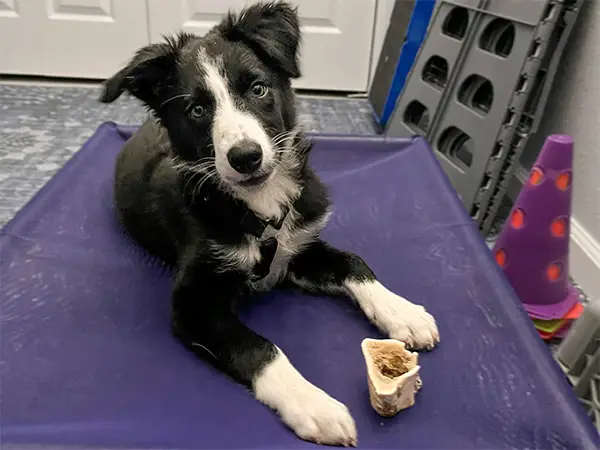
Chewing: Long-lasting chews such as bully sticks, cheek rolls, or safe bones.
Sniffing: Scatter feeding in the garden, inside boxes, or around the house.
Why it helps: These activities meet natural needs and help dogs decompress, even when company is still visiting.
Want Support Before Visitors Arrive?
A few simple games build confidence, optimism, and calm. Pair that with thoughtful management and calming outlets, and you set everyone up for success.
If you would like hands-on guidance, our group classes focus on calmness, focus, and real-world skills that hold up during busy seasons.
Explore our Life Skills and Puppy Classes and build confidence before guests arrive.
Small practice now creates smoother visits later.