Originally shared in the Cosmic Dogcast Newsletter · February 2026
Giving Dogs Their Voice
How choice and meeting biological needs can transform behavior
Hello Lovely Humans,
Here is something I have been thinking about lately, and I hope it gently shifts the way you see your dog’s behavior.
So many struggles we label as “training problems” are actually something much simpler.
Reactivity. Anxiety. Over-arousal. Shutdowns. “Stubbornness.” Lack of focus.
Often, these are not obedience issues.
They are unmet needs.
Many dogs have far less choice in their daily lives than we realize.
Where Is the Choice?
Consider meals.
Does your dog choose:
- What they eat?
- When they eat?
- How they eat? Slowly, scattered, hunted, chewed, worked for?
- Where they eat?
Usually, no.
Now think about walks.
Does your dog choose:
- Where to go?
- How long to sniff?
- What pace to walk?
- What gear to wear?
Again, often no.
What about touch?
- Do they get to choose who touches them?
- For how long?
- Can they opt out when they have had enough?
Rarely.
Even at home:
- Where do they rest?
- When do they play?
- How long do they explore?
- Do they have safe outlets for digging, chewing, sniffing?
For many dogs, the answer is very little.
Now imagine living like that.
Every meal chosen for you.
Every outing controlled.
Every interaction decided by someone else.
How would your nervous system feel?
Stressed?
Disregulated?
Frustrated?
Shut down?
Explosive sometimes?
Exactly.
Behavior Is Often a Release Valve
For a long time, dog training has centered around control. Perfect heel positions. Instant compliance. Suppressing instincts. Valuing obedience over well-being.
But dogs are not built for constant restraint.
They are built to:
- Sniff
- Explore
- Chew
- Move
- Think
- Hunt
- Connect
- Make choices
When biological needs go unmet, behavior becomes the release valve.
Pulling. Barking. Lunging. Zoomies. Destructiveness. Shutdowns.
These are not “bad dogs.”
They are stressed dogs trying to cope.
If you want to explore how emotional stress shows up as reactivity and overwhelm, our Reactivity & Behavior page explains how unmet needs often drive big emotions.
Bringing Choice Back
The good news is this can shift in small, powerful ways.
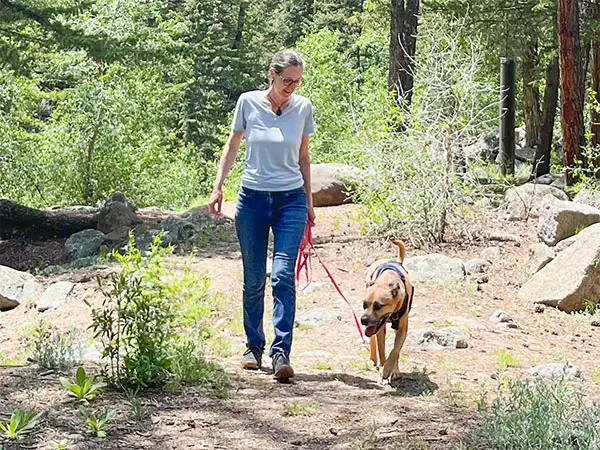
Let your dog have more say on walks. Follow them sometimes. I aim for about 75 percent dog-led exploration when it is safe.
Offer food enrichment styles:
- Scatter feeding
- Snuffle mats
- Food hunts
- Puzzle toys
- Chewing outlets
Play games that allow thinking and problem-solving.
Honor preferences when you can.
And most importantly, allow consent around touch.
Offer your hands and wait.
If your dog leans in, nudges you, relaxes, or stays close, that is a yes.
If they move away, look away, freeze, lick lips, yawn, or disengage, that is a no or not right now.
Both answers are okay.
If they do lean in, pet briefly, then pause. If they return, that is continued consent. If they move off, respect it.
When dogs learn their “no” is honored, trust grows.
We do not force hugs on people we love. Our dogs deserve that same respect.
If you are curious how we integrate choice into structured learning, visit our Training Methods page to see how agency and resilience are built into our programs.
Why Choice Matters
Choice builds confidence.
Choice lowers stress.
Choice creates calmer, more resilient dogs.
When we bring choice back into their lives, we are not just improving behavior.
We are improving well-being.
And that is where real change happens.
Want to Build More Choice Into Daily Life?
If you would like practical ideas for enrichment, choice-based games, or walks that fulfill your dog’s brain and body, I would love to support you.
Our group classes and behavior sessions focus on meeting biological needs alongside skill-building, so your dog feels understood, not controlled.
You can explore upcoming classes or schedule a session to begin building confidence from the inside out.
Because when dogs feel heard, behavior begins to soften.
Here is to happier dogs, calmer nervous systems, and relationships built on understanding.
With love for you and your pups,
Kathleen Valentine